Author: admin

  • AI Finance in 2026: How Machine Learning Reshapes Banking, Investing, and Financial Risk

    AI Finance in 2026: How Machine Learning Reshapes Banking, Investing, and Financial Risk

    The financial industry has long been an early adopter of data-driven technology, but 2026 marks a tipping point where artificial intelligence is no longer a competitive edge — it is the standard operating model. From global investment banks processing millions of transactions per second to neighborhood credit unions approving small-business loans in under five minutes, AI systems now underpin nearly every critical function in finance. This article examines the practical, working applications of machine learning across banking, capital markets, insurance, and risk — and what financial professionals actually need to know to stay ahead in 2026.

    1. Algorithmic Trading: The Rise of Multimodal Market Intelligence

    For over two decades, quantitative hedge funds have relied on statistical arbitrage and signal-based trading algorithms. What changed in 2026 is the shift from structured, price-volume models to multimodal foundation models that simultaneously process earnings transcripts, regulatory filings, satellite imagery of shipping lanes, social-media sentiment, central-bank speeches, and cross-asset order-book depth in real time. A new generation of AI-native trading platforms — including offerings from established players and newer entrants — now delivers end-to-end pipelines where large language models (LLMs) generate hypotheses, backtest them against decades of alternative data, and submit hedged execution plans with minimal human intervention.

    Notably, the industry has moved past the “black-box” criticisms that dogged early AI trading experiments. Regulators in the U.S., EU, and UK now require explainable-AI (XAI) frameworks for any model that materially affects market structure. In response, leading firms in 2026 standardize on “glass-box” architectures: every AI-generated trade signal includes a transparent chain of reasoning, feature-attribution scores, and a human-auditable decision log. Portfolio managers today do not merely trust the model — they can see why the model suggested a position, which has dramatically accelerated adoption among the buy side.

    “By 2026, multimodal AI models process 12+ alternative-data streams in real time to generate alpha, while explainable-AI frameworks satisfy new regulatory mandates.”

    2. AI-Powered Banking: From Chatbots to Autonomous Financial Operations

    Retail banking customers have interacted with AI chatbots for years, but 2026 is the year banks move far beyond simple FAQ assistants. Leading institutions now deploy agentic AI systems that autonomously resolve 80%+ of customer service requests — including dispute investigations, fee reversals, travel-notice updates, and cross-product recommendations — with satisfaction scores that rival or exceed those of human agents. Behind the counter, the transformation is even more dramatic: AI agents automate the majority of back-office operations, from KYC (Know Your Customer) document verification and AML (Anti-Money Laundering) transaction screening to trade-settlement reconciliation and regulatory report generation.

    Credit underwriting, the traditional heart of banking risk, has undergone a quiet revolution. Traditional FICO-style scoring relied on roughly 10–20 variables and took days. Modern AI credit models in 2026 ingest hundreds of signals: cash-flow volatility patterns from open-banking data, digital payment rhythms, industry-sector health indicators, and even anonymized psychometric features from application interactions. The result is thinner-file applicants — freelancers, gig workers, recent immigrants, and small businesses without long credit histories — gaining access to fairly priced credit that would have been denied under older models. The Office of the Comptroller of the Currency (OCC) and comparable EU authorities now publish quarterly fairness audits, ensuring that these expanded data inputs reduce, rather than amplify, demographic bias.

    • Agentic customer service resolves 80%+ of requests end-to-end
    • AI KYC/AML cuts onboarding time from days to minutes
    • Expanded credit signals open lending to thin-file applicants
    • Regulatory fairness audits are now standard practice

    3. Wealth Management and Personalized Financial Planning

    In 2026, the $130 trillion global wealth-management industry is being reshaped by AI financial advisors that deliver personalized, tax-optimized, goal-based plans at a fraction of the traditional cost. Unlike the first-generation robo-advisors of the 2010s — which essentially automated Markowitz mean-variance optimization — today’s AI wealth platforms combine LLM-powered conversations, integrated tax-loss harvesting, multi-account coordination across spouses and entities, ESG preference alignment, and dynamic rebalancing that responds to both market events and life-event changes detected through secure open-banking feeds and client messages.

    The impact is democratizing. Households with $50,000 to $500,000 in investable assets — historically underserved by the traditional 1%-fee wealth model — now receive sophisticated, continuously monitored advice for roughly 25 to 40 basis points annually. Even high-net-worth clients benefit: their human advisors now augment their judgment with AI co-pilots that surface estate-planning gaps, concentrated-position hedging strategies, donor-advised-fund optimization, and cross-jurisdictional tax scenarios that would previously have required a team of specialists. The industry is converging on a hybrid model, not a replacement model, where AI handles the computational heavy lifting and humans manage relationships, trust, and emotionally charged decisions around inheritance, divorce, and philanthropy.

    AI-powered wealth management dashboard showing diversified portfolios, ESG metrics, and retirement projections

    4. Fraud Detection and Financial Crime Prevention

    Financial fraud losses exceeded $56 billion globally in 2025, and as payment volumes grow, rule-based fraud systems — which flag transactions using static if-then thresholds — generate too many false positives and miss novel attack patterns entirely. In 2026, graph-neural-network (GNN) based anomaly detection has become the dominant approach. These models map the full behavioral graph of every customer: typical merchants, time-of-day patterns, device fingerprints, velocity of spend, relationships with other accounts, and even semantic patterns in payment-memo text. The result is a 30–50% reduction in false declines (critical for merchant retention) and a 60–80% improvement in catching previously unseen synthetic-identity, account-takeover, and authorized-push-payment scams.

    On the anti-money-laundering side, AI transaction monitoring in 2026 combines unsupervised pattern detection with LLM-based automated suspicious-activity-report (SAR) drafting. Investigators who once spent 60% of their time writing narrative reports now review AI-generated drafts and focus human judgment on the genuinely ambiguous cases. Several global banks report SAR throughput up by a factor of 2.5 while reducing regulatory findings on report quality. The combination of graph neural networks for detection and LLMs for reporting has turned compliance from a pure cost center into an operational strength.

    5. Insurance: Underwriting and Claims at the Speed of AI

    The insurance industry, historically slower to automate than banking, has reached a decisive inflection point in 2026. In property and casualty lines, AI models now price personal auto and homeowners policies using enriched risk signals — driving-style telematics for auto, satellite + drone imagery + weather-exposure models for property — producing loss ratios that improve by 4 to 7 percentage points over traditional actuarial models. In commercial lines, AI underwriting co-pilots ingest submission forms, loss runs, broker notes, and public-records data to generate fully drafted quotes in under 15 minutes, compared with the industry median of 6 days pre-2024.

    Claims handling has arguably seen the most dramatic improvement. For auto claims, AI multimodal models analyze customer-submitted photos and video alongside police reports, repair databases, and telematics data, generating a fully validated damage estimate and initiating payment — without a human adjuster ever touching the file — for 55% of minor-to-moderate claims in 2026. Customers receive payments in hours, not weeks, and carriers reduce indemnity leakage by detecting staged accidents and inflated repair bills with far greater accuracy. In life and health insurance, AI-powered claims automation and medical-record summarization are similarly compressing cycle times and improving accuracy.

    6. Risk Management: From Periodic Reports to Continuous Intelligence

    Traditional enterprise risk management operated on a quarterly cadence: stress tests, VaR (Value-at-Risk) reports, and model-validation exercises were produced, reviewed, and filed. AI has dismantled that calendar. In 2026, banks, asset managers, and insurers run continuous, real-time risk intelligence platforms that update counterparty credit risk, liquidity risk, market risk, and operational risk exposures whenever new data arrives — not when the reporting period closes. Generative AI co-pilots then translate these live dashboards into board-ready briefings, regulatory submissions, and hedging recommendations.

    Perhaps most importantly, AI scenario generation has transformed stress testing. Regulators now expect institutions to model not just the 3–5 canonical scenarios of the past, but hundreds of plausible combinations of macroeconomic, geopolitical, and climate shocks. Foundation models trained on economic history, news, and scientific climate projections generate coherent, internally consistent stress scenarios on demand. Risk teams that once ran 5 scenarios per quarter now evaluate 200+ per week, producing materially more resilient balance sheets and earlier warning of emerging threats.

    7. Implementation Priorities for Financial Leaders in 2026

    For CFOs, CIOs, COOs, and heads of transformation across financial services, the question is no longer whether to adopt AI, but where to start and how to scale reliably. Based on the patterns that differentiate winning deployments this year, leaders should prioritize the following five actions immediately.

    1. Audit your data foundation first. AI fails on bad data. Inventory your on-prem and cloud data estates, resolve MDM gaps, and instrument data-quality monitoring before scaling model deployments.
    2. Build a model-risk-governance framework. Regulators expect documented version control, bias testing, out-of-band monitoring, and rollback playbooks for every production AI model. Do not treat AI governance as an afterthought.
    3. Start with augmentation, not replacement. The most successful 2026 deployments give human experts AI co-pilots rather than replacing them outright. Measure augmentation metrics: time per investigation, decisions per underwriter, false-alarm reduction — not just headcount savings.
    4. Invest in prompt-engineering and LLM-ops tooling. The productivity gap between teams using structured prompt templates, retrieval-augmented generation, and structured output schemas versus ad-hoc chatbot usage is roughly 4x in financial services.
    5. Upskill the existing workforce relentlessly. The shortage is not in AI PhDs — it is in line-of-business professionals who can spot high-value AI opportunities, evaluate vendor claims, and validate model outputs within their domain.

    Looking Ahead: The 2026 Financial Landscape

    Artificial intelligence in finance has crossed the chasm. What began as experimental pilots in chatbots and simple process bots is now a systemic, architecture-level transformation spanning trading, lending, underwriting, claims, compliance, risk, and wealth advisory. Financial institutions that treat AI as a bolt-on tool — rather than as the new substrate of their operating model — will fall materially behind in cost-to-income ratios, customer experience, and risk-adjusted returns over the next 24 to 36 months.

    At the same time, the responsible-adoption agenda has never been more important. The same capabilities that unlock financial inclusion, faster claims, lower fraud, and more resilient risk management can — without diligent governance — produce biased lending, opaque trading, overconfident automation, and new systemic vulnerabilities. The defining challenge for financial leaders in 2026 and beyond is not whether to deploy AI at scale, but how to deploy it at scale with the transparency, fairness, and accountability that a regulated, trust-based industry demands. The institutions that strike this balance will define the next decade of finance.

  • AI Video Generation Showdown: Sora, Runway, and Pika Compared for 2026

    AI Video Generation Showdown: Sora, Runway, and Pika Compared for 2026

    AI video generation went from impressive-but-limited demos to practical creative tools remarkably quickly. In 2026, three platforms lead the field: OpenAI’s Sora, Runway Gen-3 Alpha, and Pika Labs. Each takes a different approach to the challenge of turning text or images into video, and each has distinct strengths for different use cases.

    Sora: Long-Form Realism

    OpenAI’s Sora set the benchmark for AI video quality. Its ability to generate up to 60 seconds of coherent, realistic footage was a leap forward. Sora excels at photorealistic scenes — natural landscapes, urban environments, and human figures in motion. The temporal consistency (keeping objects and lighting consistent across frames) is noticeably better than competitors.

    The main limitations are access and control. Sora’s availability has been limited, and the tool offers fewer creative controls than competitors. You cannot easily specify camera movements, transitions, or specific visual effects. For users who need precise creative direction, this is a significant drawback. Pricing through ChatGPT Pro puts it at the premium end of the market.

    Runway Gen-3: The Creative Professional’s Choice

    Runway has been in the AI video space longer than most, and Gen-3 Alpha represents their most capable model yet. Where Runway shines is creative control. The platform offers motion brush (painting areas of the image that should move), camera controls (pan, tilt, zoom, orbit), and director mode for specifying complex shot compositions.

    Runway also offers a suite of editing tools beyond generation: inpainting, frame interpolation, and lip sync. This makes it the most complete platform for creative professionals who need to integrate AI video into existing workflows. Quality is excellent, though slightly behind Sora on pure photorealism. Clips are limited to 10 seconds per generation, but can be extended.

    Pika: Accessible and Fast

    Pika Labs focuses on accessibility and speed. The platform generates 3-second clips quickly, with a Discord-based interface that is easy to use. Pika’s Lip Sync feature — matching audio to character mouth movements — is particularly popular for social media content creation.

    While Pika’s output quality is a step below Sora and Runway, its ease of use and lower price point make it attractive for casual creators and social media content. The platform has been adding features rapidly, including image-to-video, video-to-video transformation, and expanding clip length. For quick, shareable content, Pika is hard to beat on value.

    Comparison Summary

    • Best for photorealism: Sora
    • Best for creative control: Runway Gen-3
    • Best for quick social content: Pika
    • Longest clips: Sora (up to 60s)
    • Most editing tools: Runway
    • Most affordable: Pika

    The Bigger Picture

    AI video is following the same trajectory as AI image generation. What started as a novelty is becoming a standard creative tool. The current limitations — short clips, occasional artifacts, and limited control — are shrinking with each release. For marketers, content creators, and creative agencies, the question is shifting from “should we use AI video?” to “which tool fits our workflow?”

    The honest assessment for 2026: none of these tools can fully replace professional video production for high-stakes content. But for social media, prototyping, concept testing, and supplementary content, they are ready today. And the gap to professional quality is closing faster than most people expected.

  • RAG Explained: Building AI Applications That Know Your Data in 2026

    RAG Explained: Building AI Applications That Know Your Data in 2026

    Large language models are trained on public data, but most valuable business applications need AI that understands private information — company documents, customer data, internal knowledge bases. Retrieval-Augmented Generation (RAG) is the architecture that makes this possible, and it has become the standard pattern for building production AI applications in 2026.

    How RAG Works

    RAG combines two steps: retrieval and generation. When a user asks a question, the system first searches a database of your documents to find the most relevant passages. It then passes those passages to the language model along with the user’s question, asking the model to generate an answer based on the retrieved context.

    This approach has several advantages over fine-tuning. You can update the knowledge base instantly without retraining. The model can cite its sources, making answers verifiable. And you avoid the cost and complexity of custom model training. For most enterprise applications, RAG is the right starting point.

    The Retrieval Pipeline

    Building a good RAG system is mostly about building good retrieval. The pipeline starts with document processing: splitting documents into chunks, generating embeddings (vector representations) for each chunk, and storing them in a vector database. Popular vector databases include Pinecone, Weaviate, Qdrant, and pgvector (PostgreSQL extension).

    At query time, the user’s question is converted to an embedding, and the system finds the most similar document chunks using vector similarity search. The quality of chunking — how you split documents — has a massive impact on retrieval quality. Too small, and you lose context. Too large, and you dilute relevance. Semantic chunking (splitting at natural boundaries like paragraph or section breaks) typically outperforms fixed-size splitting.

    Beyond Basic RAG

    Basic RAG — embed, search, generate — is easy to build but has limitations. Production systems add several enhancements. Hybrid search combines vector similarity with keyword matching (BM25), catching exact matches that semantic search might miss. Re-ranking uses a cross-encoder model to re-score retrieved results for relevance. Query transformation rewrites the user’s question to improve retrieval before searching.

    For complex questions that require multi-step reasoning, agentic RAG systems use an LLM to decide what to retrieve, synthesize information across multiple retrievals, and determine when enough context has been gathered to answer. This is more expensive but dramatically improves accuracy on questions that require connecting information from different sources.

    Evaluating RAG Systems

    The biggest mistake teams make with RAG is not evaluating. Because the system generates fluent text, it is easy to assume it is working. But fluency is not accuracy. A RAG system that confidently produces wrong answers is worse than one that admits ignorance.

    Frameworks like RAGAS and TruLens provide automated evaluation metrics: context relevance (did we retrieve the right documents?), faithfulness (does the answer match the retrieved context?), and answer relevance (does the answer address the question?). Building an evaluation suite with golden Q&A pairs and running it on every change to the system is essential for maintaining quality as your data and usage evolve.

  • AI Agents in 2026: From Chatbots to Autonomous Problem-Solvers

    AI Agents in 2026: From Chatbots to Autonomous Problem-Solvers

    The conversation around AI has shifted from “what can it answer?” to “what can it do?” AI agents — systems that can autonomously plan, execute multi-step tasks, and adapt to results — represent the next evolution beyond conversational AI. In 2026, we are seeing these agents move from research demos to production tools that handle real work.

    What Makes an AI Agent Different

    A chatbot responds to prompts. An agent pursues goals. The distinction matters. When you ask a chatbot to “research competitors,” it generates a list of tips. When you ask an agent, it searches the web, collects data, organizes findings into a report, and flags the most important insights — all without step-by-step human instruction.

    Technically, agents combine a large language model with tools (web search, code execution, file access, API calls), memory (to maintain context across steps), and a planning loop (to break goals into subtasks and adapt when things go wrong). The orchestration framework — how the agent decides what to do next — is what separates a good agent from a brittle one.

    Current State of Agent Frameworks

    Several frameworks have emerged for building agents. OpenAI’s Assistants API provides a hosted solution with built-in tools. LangChain and LlamaIndex offer open-source orchestration layers. Microsoft’s AutoGen enables multi-agent collaboration. Anthropic’s Claude can use computers through tool use, opening up browser-based automation.

    The most practical agent implementations in 2026 are focused and vertical. Rather than trying to build a general-purpose agent that can do anything, successful deployments tackle specific workflows: research and reporting, code review and testing, customer support escalation, and data analysis pipelines. Narrow scope makes agents reliable enough for production use.

    Real-World Use Cases

    In software development, agents are being used for automated bug triage. An agent receives a bug report, reproduces the issue, identifies the likely cause, suggests a fix, and opens a pull request. Human developers review the PR, but the initial investigation — which used to take hours — is compressed to minutes.

    In research, agents are performing literature reviews. Given a research question, an agent searches academic databases, reads relevant papers, synthesizes findings, and produces a structured summary with citations. The output is not a replacement for expert analysis, but it provides a comprehensive starting point that would take a human days to assemble.

    Limitations and Risks

    Agents are not ready for unsupervised deployment on important tasks. They can get stuck in loops, make confident errors, and take actions that are technically correct but contextually wrong. The planning capabilities that seem impressive in demos can break down when faced with real-world complexity, ambiguity, and edge cases.

    The safe approach is human-in-the-loop: agents handle the heavy lifting of execution while humans review key decisions. This captures most of the efficiency gains while maintaining accountability. As models improve and frameworks mature, the scope of autonomous action will gradually expand — but the human oversight layer will remain essential for the foreseeable future.

  • Best AI Coding Assistants in 2026: Beyond GitHub Copilot

    Best AI Coding Assistants in 2026: Beyond GitHub Copilot

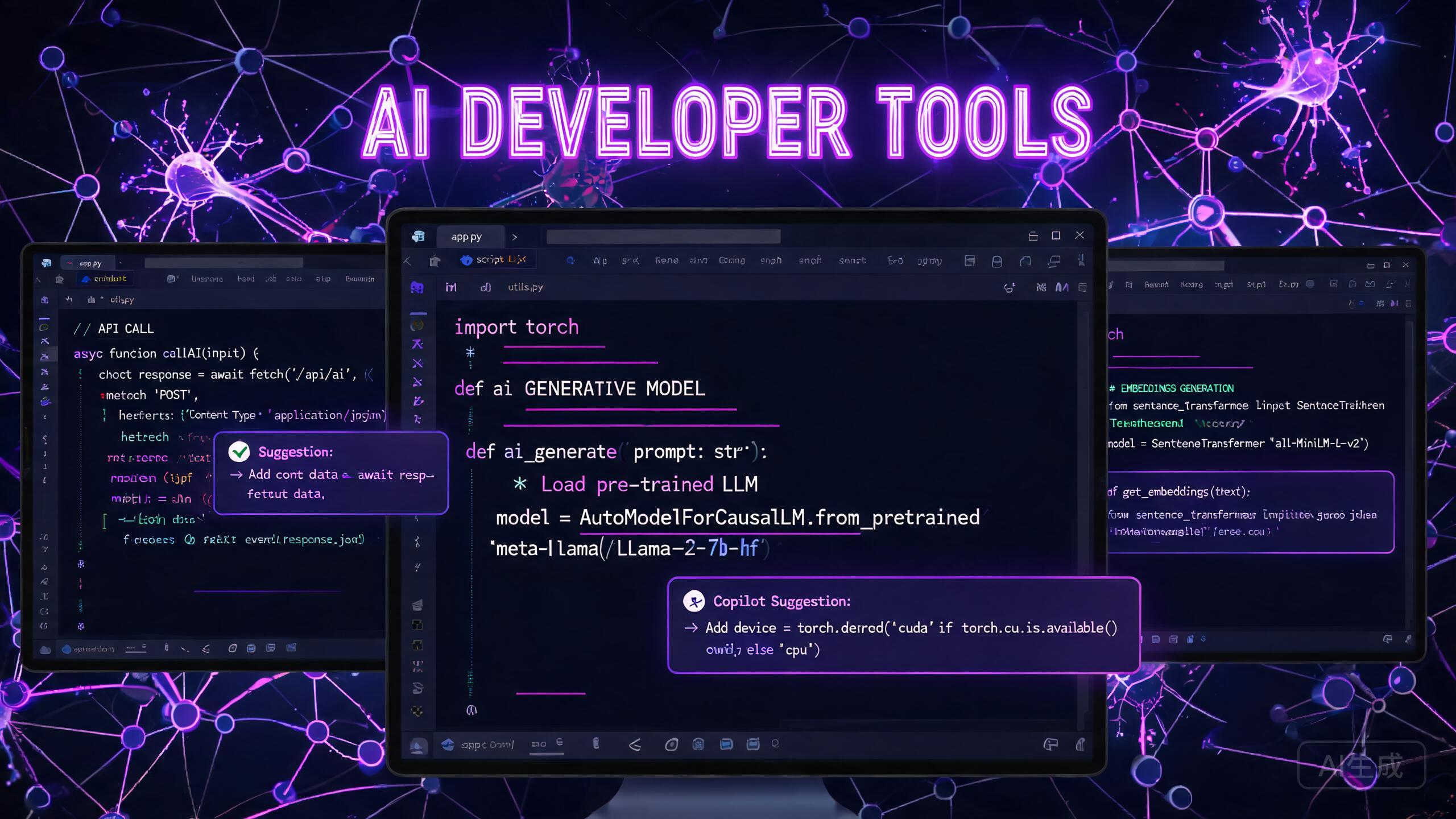
    GitHub Copilot may have pioneered the AI coding assistant category, but in 2026 it is no longer the only option — or necessarily the best one. A new generation of AI-powered development tools has emerged, each with different philosophies about how AI should integrate into the coding workflow. Here is a practical comparison to help you choose.

    Cursor: The AI-First IDE

    Cursor is not a plugin — it is a standalone IDE built from the ground up around AI. Forked from VS Code, it maintains full extension compatibility while adding deep AI integration. The standout feature is the Composer: a multi-file editing mode where you describe a change, and Cursor modifies multiple files simultaneously, showing you a diff for review.

    Cursor also offers codebase-wide context awareness. Unlike Copilot, which primarily sees the current file, Cursor can index your entire project and reference it when generating code. This means it can suggest changes that account for your existing patterns, imports, and architecture. The codebase chat feature lets you ask questions about your project and get answers grounded in your actual code.

    Pricing starts at $20/month for the Pro plan. The main drawback is that you are adopting a new IDE, even if it is VS Code-compatible. Some teams prefer to stay on their existing IDE and add AI as a plugin.

    GitHub Copilot: The Incumbent

    GitHub Copilot has evolved significantly since its launch. Copilot Chat brings conversational AI to VS Code and JetBrains IDEs. The inline chat allows refining suggestions without leaving the editor. The latest improvements in context awareness and test generation have narrowed the gap with newer competitors.

    Copilot’s biggest advantage is integration. It works with the IDEs developers already use, connects to GitHub for repository context, and benefits from Microsoft’s infrastructure. At $10/month for individuals and $19/user/month for business, it remains competitively priced. For teams already in the GitHub ecosystem, it is the path of least resistance.

    Codeium: The Free Alternative

    Codeium has gained traction by offering a generous free tier that includes autocomplete, chat, and in-line commands across 40+ IDEs. The free plan supports individuals with unlimited completions, making it the best option for developers who want AI assistance without a subscription.

    The Enterprise plan ($15/user/month) adds context-aware features, team analytics, and self-hosted deployment options. While Codeium’s code completion quality is slightly behind Cursor and Copilot in benchmark tests, the gap is small and the value proposition is compelling. For cost-conscious teams, it is worth serious consideration.

    Windsurf: The Agentic Approach

    Windsurf (from Codeium) represents the agentic approach to AI coding. Rather than just suggesting code, Windsurf can autonomously implement features, fix bugs, and refactor code across multiple files. It maintains a “flow state” where the AI understands the full context of what you are working on and can take multi-step actions.

    This is the most ambitious approach, and it is also the most experimental. Agentic coding can be incredibly productive when it works well, saving hours on routine implementation tasks. But when the agent misunderstands the intent, the cleanup can take longer than doing it manually. Windsurf is best for developers who are comfortable reviewing AI-generated code carefully and who work on greenfield projects or well-tested codebases.

    Choosing the Right Tool

    • Best overall experience: Cursor (if you can switch IDEs)
    • Best for GitHub-integrated teams: Copilot
    • Best free option: Codeium
    • Best for autonomous task completion: Windsurf
    • Best for JetBrains users: Copilot or Codeium

    The reality is that AI coding assistants are becoming table stakes. The question is shifting from “should I use one?” to “which one fits my workflow?” Most offer free trials — the best approach is to test 2-3 on your actual codebase and measure productivity impact over a few weeks. The right choice depends on your language, IDE, project size, and how much autonomy you are comfortable giving the AI.

  • AI Ethics and Safety in 2026: The Real Challenges We Cannot Ignore

    AI Ethics and Safety in 2026: The Real Challenges We Cannot Ignore

    AI ethics often gets dismissed as philosophical navel-gazing, but in 2026 the challenges are concrete and pressing. As AI systems are deployed in healthcare, criminal justice, hiring, and financial services, the consequences of getting ethics wrong are real — affecting individuals, communities, and institutions. Here is a grounded look at the issues that practitioners and policymakers are actually grappling with.

    Bias and Fairness

    AI systems learn patterns from training data, and that data reflects historical inequalities. A hiring tool trained on past decisions will replicate past biases. A facial recognition system trained predominantly on lighter-skinned faces will perform worse on darker-skinned faces. This is not a hypothetical concern — multiple studies have documented these disparities in deployed systems.

    The technical solutions are not simple. “Debiasing” datasets is difficult because bias is often subtle and multifaceted. Adjusting model outputs to equalize performance across groups can introduce other problems. The most effective approach combines technical methods (fairness constraints, adversarial debiasing) with procedural safeguards (diverse teams, stakeholder engagement, impact assessments before deployment).

    Deepfakes and Synthetic Media

    The quality of AI-generated video and audio has reached the point where synthetic media is indistinguishable from real recordings. This technology has legitimate creative applications, but it also enables fraud, harassment, and disinformation at scale. Political deepfakes have already appeared in elections worldwide, and voice cloning scams have cost individuals and businesses significant sums.

    Technical countermeasures — watermarking, provenance tracking, detection models — are being developed but remain in an arms race with generation technology. Regulatory approaches like the EU AI Act’s transparency requirements for synthetic media and state-level deepfake laws in the US are early attempts to address the problem. The fundamental challenge is that detection will always lag behind generation, making prevention and rapid response more important than detection alone.

    The Alignment Problem

    As AI systems become more capable, ensuring they pursue intended goals rather than harmful proxies becomes critical. This is the alignment problem, and it is not theoretical. A recommendation system optimized for engagement can amplify polarizing content. A content moderation system optimized for speed can over-censor. An AI agent given a goal can find unexpected and undesirable ways to achieve it.

    Current approaches to alignment include reinforcement learning from human feedback (RLHF), constitutional AI (training models to follow principles), and interpretability research (understanding what models actually learned). These methods help but are not complete solutions. The field increasingly recognizes that alignment is not a problem to be solved once, but an ongoing process of monitoring, correction, and adaptation as capabilities grow.

    Regulation and Governance

    The regulatory landscape is taking shape. The EU AI Act, with its risk-based framework, is the most comprehensive regulation to date. The US has taken a more fragmented approach, with agency-specific guidance and state-level laws. The UK has positioned itself as pro-innovation with principles-based oversight. China has moved quickly on specific applications, particularly generative AI content controls.

    The tension between innovation and safety is real. Over-regulation can stifle beneficial applications and concentrate power among large companies that can afford compliance costs. Under-regulation can allow harms to accumulate before they are addressed. Finding the right balance requires technical literacy from lawmakers, honesty about risks from AI developers, and meaningful engagement with affected communities.

  • Midjourney vs DALL-E 3 vs Stable Diffusion: Which AI Image Generator Wins in 2026?

    Midjourney vs DALL-E 3 vs Stable Diffusion: Which AI Image Generator Wins in 2026?

    AI image generation has evolved from a curiosity into a creative industry staple. Three platforms dominate the conversation: Midjourney, DALL-E 3 (via ChatGPT), and Stable Diffusion. Each takes a fundamentally different approach to turning text into images, and the right choice depends heavily on your workflow, budget, and output requirements.

    Midjourney: The Aesthetic Champion

    Midjourney has built its reputation on producing images with a distinct artistic quality. Even at default settings, outputs tend to have a polished, painterly feel that requires less post-processing than competitors. The V6 release brought dramatic improvements in prompt adherence, text rendering within images, and photorealistic detail.

    The platform now operates through both Discord and a dedicated web interface. The web app has matured significantly, offering features like style references, character consistency, and zoom-out composition tools. Pricing starts at $10/month for the basic plan, with the standard $30/month tier adding relaxed hours and stealth mode for private generation.

    Where Midjourney struggles is with precise control. While prompt adherence has improved, getting exact compositions, specific text, or consistent characters across multiple images still requires significant effort. The platform also requires a subscription — there is no free tier.

    DALL-E 3: The Conversational Creator

    DALL-E 3’s biggest advantage is its integration with ChatGPT. You describe what you want in natural language, and ChatGPT handles the prompt engineering internally. This makes it by far the most accessible option for non-technical users. You can also refine images conversationally: “make the background darker” or “add more people” work as natural follow-ups.

    DALL-E 3 excels at understanding complex, multi-element prompts and rendering text within images — something that was nearly impossible with earlier generations. It handles requests like “a billboard that says WELCOME TO MIAMI in bold red letters” with impressive accuracy.

    The main drawback is output quality. While DALL-E 3 images are good, they lack the default polish of Midjourney. Images can look flat or overly smooth. Pricing is usage-based through ChatGPT Plus ($20/month) or API credits, which can add up quickly if you generate frequently.

    Stable Diffusion: The Power User’s Choice

    Stable Diffusion is the open-source option, and it offers something the others cannot: complete control. You can run it locally on your own GPU, use custom models trained for specific art styles, and integrate it into any pipeline via API. The ecosystem of community-trained models — from photorealistic to anime to architectural rendering — is unmatched.

    The trade-off is complexity. Setting up Stable Diffusion requires technical knowledge. Tools like Automatic1111, ComfyUI, and Forge make the process more manageable, but there is still a learning curve. You need to understand concepts like samplers, CFG scale, and checkpoints to get the best results.

    Cost is the big advantage. Running locally on your own hardware is effectively free (beyond electricity). Cloud providers like Replicate, RunPod, and Fal.ai offer pay-per-use API access at rates significantly lower than Midjourney or DALL-E. Commercial licensing terms are also more flexible, depending on the model you use.

    Head-to-Head Comparison

    • Output quality: Midjourney > DALL-E 3 > Stable Diffusion (at default settings)
    • Ease of use: DALL-E 3 > Midjourney > Stable Diffusion
    • Control and customization: Stable Diffusion > Midjourney > DALL-E 3
    • Pricing flexibility: Stable Diffusion > DALL-E 3 > Midjourney
    • Commercial licensing clarity: Midjourney > DALL-E 3 > Stable Diffusion (varies by model)
    • Text rendering in images: DALL-E 3 > Midjourney > Stable Diffusion

    Which Should You Choose?

    For marketing teams and agencies that need polished visuals quickly, Midjourney remains the best default choice. The combination of quality, speed, and the web interface makes it ideal for professional creative work.

    For casual users and non-technical creators, DALL-E 3 through ChatGPT is unbeatable. The conversational interface removes all technical barriers, and the quality is more than sufficient for blog posts, presentations, and social media.

    For developers, researchers, and power users, Stable Diffusion is the only option that offers true ownership and control. If you need to generate at scale, integrate into a custom pipeline, or use specialized models, no other platform comes close.

    The good news is that these platforms are converging. Midjourney is adding more control features, DALL-E is improving quality, and Stable Diffusion’s ecosystem is making the tool more accessible. Regardless of which you choose today, the gap will only narrow in the coming year.

  • The State of AI Marketing: What Actually Works in 2026

    The State of AI Marketing: What Actually Works in 2026

    The marketing technology landscape has been flooded with AI tools, each promising to automate content creation, optimize campaigns, and unlock insights. After the initial hype cycle, a clearer picture is emerging of what AI can and cannot do for marketing teams. Here is a practical assessment of where AI marketing tools actually deliver value in 2026.

    Content Creation: AI as Co-Writer

    AI writing tools have become standard in marketing workflows, but the way they are used has evolved. The most successful teams do not use AI to generate finished content — they use it to accelerate the research, outlining, and first-draft stages. A typical workflow involves using AI to generate topic ideas, create content briefs, draft sections, and then having a human editor refine, fact-check, and add original insights.

    Tools like Jasper, Writer, and Copy.ai have added brand voice training, allowing them to match a company’s tone and style guidelines. This reduces the editing burden significantly. However, AI-generated content still ranks poorly in search engines when published without substantial human enhancement. Google’s helpful content guidelines are clear: content created primarily for search engines rather than users will be demoted.

    SEO Research and Optimization

    AI has transformed SEO research. Tools like Semrush, Ahrefs, and Surfer SEO now use AI to analyze search intent, identify content gaps, and suggest optimization strategies. Instead of manually reviewing top-ranking pages, marketers can get AI-powered briefs that outline exactly what topics, headings, and entities a piece of content needs to cover to compete.

    The most valuable AI application in SEO is predictive analysis — identifying which keywords are trending, which are declining, and where content opportunities exist before competitors notice. This requires combining AI with human judgment: AI can surface opportunities, but a marketer must decide whether pursuing them aligns with business goals and audience needs.

    Campaign Optimization

    Ad platforms have been using machine learning for years, but the sophistication has increased dramatically. Google’s Performance Max campaigns use AI to automatically place ads across all Google properties, adjust bids, and test creative variations. Meta’s Advantage+ campaigns do similar optimization across Facebook and Instagram.

    The trade-off is control. AI-optimized campaigns can deliver better ROI, but they are also opaque — you are trusting the platform’s algorithm to make decisions about where your budget goes. For small budgets, this is fine. For large budgets, many marketers still prefer manual control over key decisions, using AI for optimization within guardrails they define.

    Personalization at Scale

    AI enables personalization that was previously impossible. Email marketing platforms can now generate personalized subject lines, product recommendations, and send-time optimization for each individual recipient. E-commerce sites use AI to dynamically adjust homepage content, product ordering, and promotional banners based on visitor behavior.

    The key to effective personalization is data quality. AI personalization only works when you have clean, comprehensive data about your customers. Before investing in AI personalization tools, ensure your CRM, analytics, and customer data platforms are properly integrated and your data is accurate.

    What Does Not Work

    Despite the hype, several AI marketing applications have not lived up to expectations. Fully automated social media posting tends to produce generic, low-engagement content. AI-generated video is improving but still not ready for brand-critical applications. And AI “persona generators” that claim to predict customer behavior from limited data are more science fiction than science.

    The pattern is consistent: AI excels at tasks that involve pattern recognition, data analysis, and first-draft generation. It fails at tasks requiring emotional intelligence, cultural awareness, creative originality, and strategic judgment. The most effective marketing teams use AI for the former and reserve human talent for the latter.

  • AI for Small Business: Practical Tools That Actually Save Time in 2026

    AI for Small Business: Practical Tools That Actually Save Time in 2026

    For small business owners, the AI revolution can feel overwhelming. Every day brings a new tool promising to transform operations, but separating genuinely useful products from marketing hype is challenging. This guide focuses on AI tools that small businesses are actually using in 2026 to save measurable time and money — not theoretical use cases, but practical applications with real ROI.

    Accounting and Bookkeeping

    AI-powered accounting tools have matured significantly. Platforms like QuickBooks Online and Xero now use AI to automate receipt scanning, categorize transactions, and reconcile accounts. The hours saved on manual data entry are substantial — most small businesses report cutting bookkeeping time by 50-70% after full implementation.

    Beyond basic automation, AI is being used for cash flow forecasting. By analyzing historical patterns, seasonal trends, and payment behaviors, these tools can predict when cash might get tight weeks in advance. This gives business owners time to arrange financing or adjust spending before a crisis hits.

    Customer Service and Support

    AI chatbots have come a long way from the frustrating rule-based systems of the past. Modern AI-powered support tools can understand natural language queries, access your knowledge base, and resolve common customer issues without human intervention. Tools like Intercom’s Fin, Zendesk AI, and CustomGPT.ai are being used by small businesses to handle 40-60% of support tickets automatically.

    The key is setting realistic expectations. AI handles routine questions — order status, return policies, basic troubleshooting — very well. Complex or emotionally sensitive issues still need human agents. The most effective setup uses AI as a first responder that resolves easy cases and escalates the rest with full context to a human agent.

    Marketing and Content Creation

    For small businesses without a dedicated marketing team, AI has been transformative. Tools like Jasper and Copy.ai help generate blog posts, social media content, and email campaigns in minutes. Canva’s AI features enable non-designers to create professional graphics. Mailchimp’s AI-powered optimization suggests the best send times and subject lines.

    The caveat: AI-generated content still needs human review. While AI can produce a first draft quickly, the output often needs editing for brand voice, accuracy, and originality. The time savings are real — typically 50-70% on content production — but only if you treat AI as a drafting assistant, not a final publisher.

    Operations and Project Management

    AI is creeping into project management tools, and the results are surprisingly practical. Notion AI helps summarize meeting notes and generate task lists. Asana’s AI features predict project risks and suggest timeline adjustments. Monday.com’s AI can automatically assign tasks based on team capacity and skill matching.

    For inventory-based businesses, AI demand forecasting tools are becoming accessible at small-business price points. Tools like Lokad and Inventory Planner use machine learning to predict demand based on historical sales, seasonality, and market trends, helping businesses avoid both stockouts and overstock.

    Getting Started: A Practical Approach

    The biggest mistake small businesses make with AI is trying to adopt too many tools at once. A better approach is to identify your biggest time sink — whether that is bookkeeping, customer support, or content creation — and implement one AI tool to address it. Measure the impact for 30 days, then decide whether to expand.

    Most AI tools offer free trials or freemium plans. Take advantage of these to test whether a tool fits your workflow before committing. And remember: the goal is not to use AI for its own sake. The goal is to save time, reduce errors, and free yourself to focus on the parts of your business that actually need human judgment.

  • AI in Education: How Adaptive Learning Platforms Are Changing the Classroom in 2026

    AI in Education: How Adaptive Learning Platforms Are Changing the Classroom in 2026

    Education has always struggled with a fundamental problem: every student learns differently, but most classrooms teach to the average. AI-powered adaptive learning platforms are changing this by personalizing content, pacing, and assessment to each individual student. In 2026, these tools have moved from experimental pilots to mainstream adoption in schools, universities, and corporate training programs.

    How Adaptive Learning Works

    Adaptive learning platforms use machine learning models to continuously assess a student’s understanding and adjust the learning path accordingly. If a student struggles with algebraic fractions, the system identifies the knowledge gap and provides targeted remediation before moving forward. If a student masters a concept quickly, the system accelerates, preventing the boredom that leads to disengagement.

    The technology behind this involves knowledge graphs that map the relationships between concepts, item response theory to estimate student proficiency, and recommender systems that select the next best learning activity. Platforms like Khan Academy, Duolingo, and DreamBox have been refining these approaches for years, and the results are measurable — studies consistently show 20-30% improvements in learning outcomes compared to one-size-fits-all approaches.

    AI Tutors: Always Available

    The emergence of large language models has enabled a new category: AI tutors that can engage in Socratic dialogue, answer questions, and provide step-by-step guidance. Unlike static video lessons, these tutors adapt to student questions in real-time, rephrasing explanations and providing alternative examples when a student is confused.

    Tools like Khanmigo (Khan Academy’s AI tutor), ChatGPT’s study features, and Microsoft Copilot for Education are being piloted in classrooms worldwide. The most effective implementations use AI as a complement to human teachers — handling routine questions and practice while freeing teachers to focus on deeper engagement, mentorship, and social-emotional learning.

    Addressing Academic Integrity

    The elephant in the room is academic integrity. When students have access to AI that can write essays, solve math problems, and generate code, traditional assessment methods become unreliable. Schools are responding with a mix of strategies: in-class writing assessments, oral presentations, project-based learning, and AI detection tools (though the latter remain unreliable).

    The more productive approach is to redesign assessments around skills that AI cannot replicate: critical thinking, creative problem-solving, collaboration, and ethical reasoning. Some progressive educators are even teaching students to use AI effectively as a research and brainstorming tool, then assessing their ability to evaluate, synthesize, and build on AI-generated content.

    Accessibility and Equity

    One of the most promising aspects of AI in education is its potential to democratize access to quality tutoring. A student in a rural school district with limited resources can access the same AI-powered learning tools as a student in a wealthy suburb. AI tutors can provide personalized attention that would be prohibitively expensive with human teachers, especially in subjects where qualified educators are scarce.

    However, the digital divide remains real. AI tools require internet access and devices, which are not universally available. There are also concerns about data privacy — educational AI platforms collect detailed information about student learning patterns, and how this data is stored, used, and protected matters enormously.

    The Teacher’s Evolving Role

    AI is not replacing teachers — it is redefining their role. When AI handles content delivery, practice, and basic assessment, teachers can focus on what humans do best: mentoring, facilitating discussions, providing emotional support, and designing creative learning experiences. The most successful schools are those that embrace this shift, using AI to amplify teacher impact rather than trying to automate teaching away.